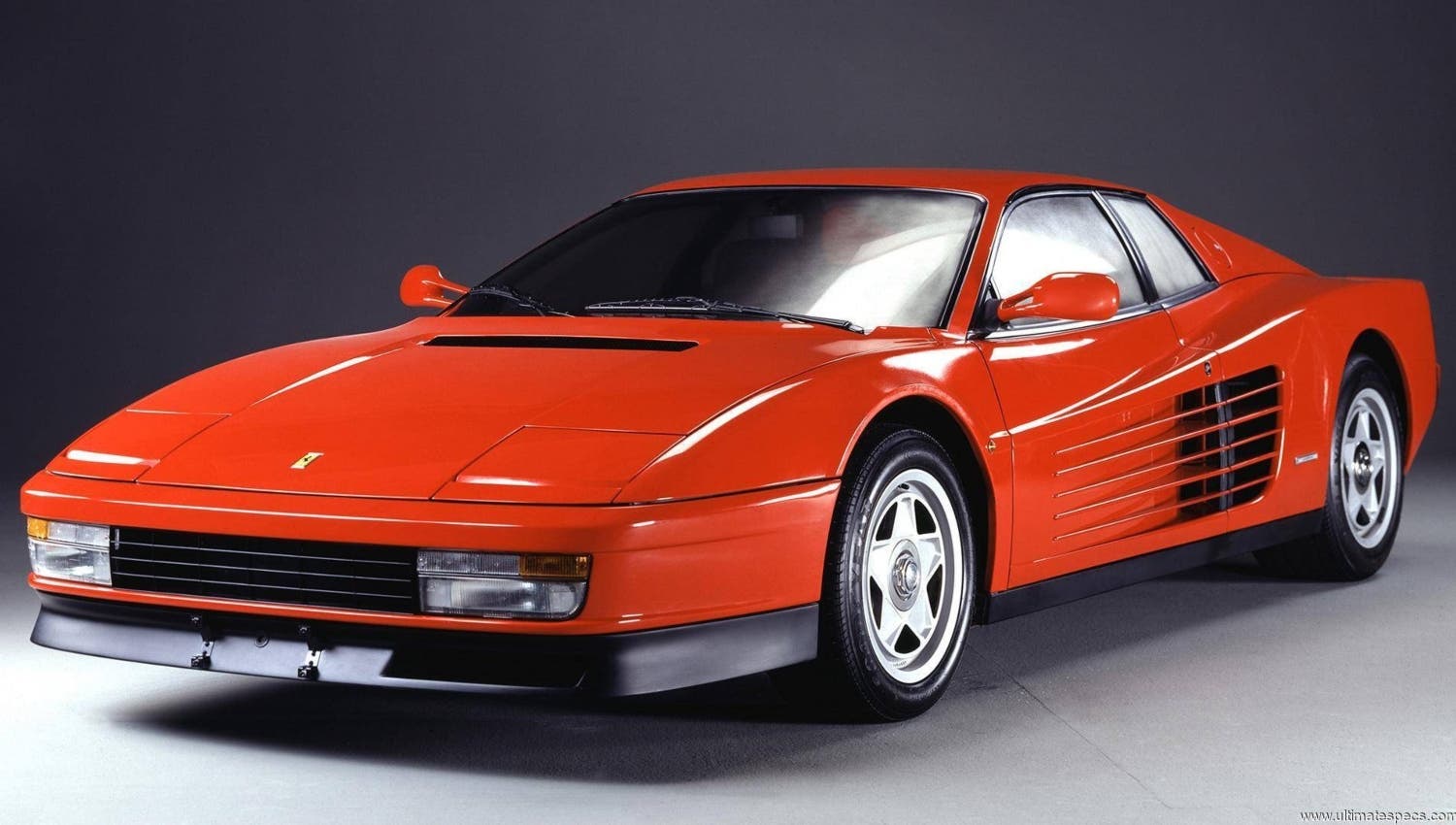
The Ferrari Testarossa is one of those cars that needs no introduction. When it debuted in the mid-1980s, it immediately entered the collective imagination and never left it. Not only because of its performance or its engine, but above all because of a design that, at the time, seemed to come straight from the future. Pininfarina achieved something rare, modernizing Ferrari’s design language without betraying it, while maintaining a clear connection with the brand’s heritage.
Everyone knows what the Testarossa looks like. However, not everyone knows that many of its styling features were born from technical requirements or regulatory constraints. Details that today are often seen as pure aesthetics, but that actually reveal a great deal about how the car was engineered.
Ferrari Testarossa: the design secrets behind an automotive icon
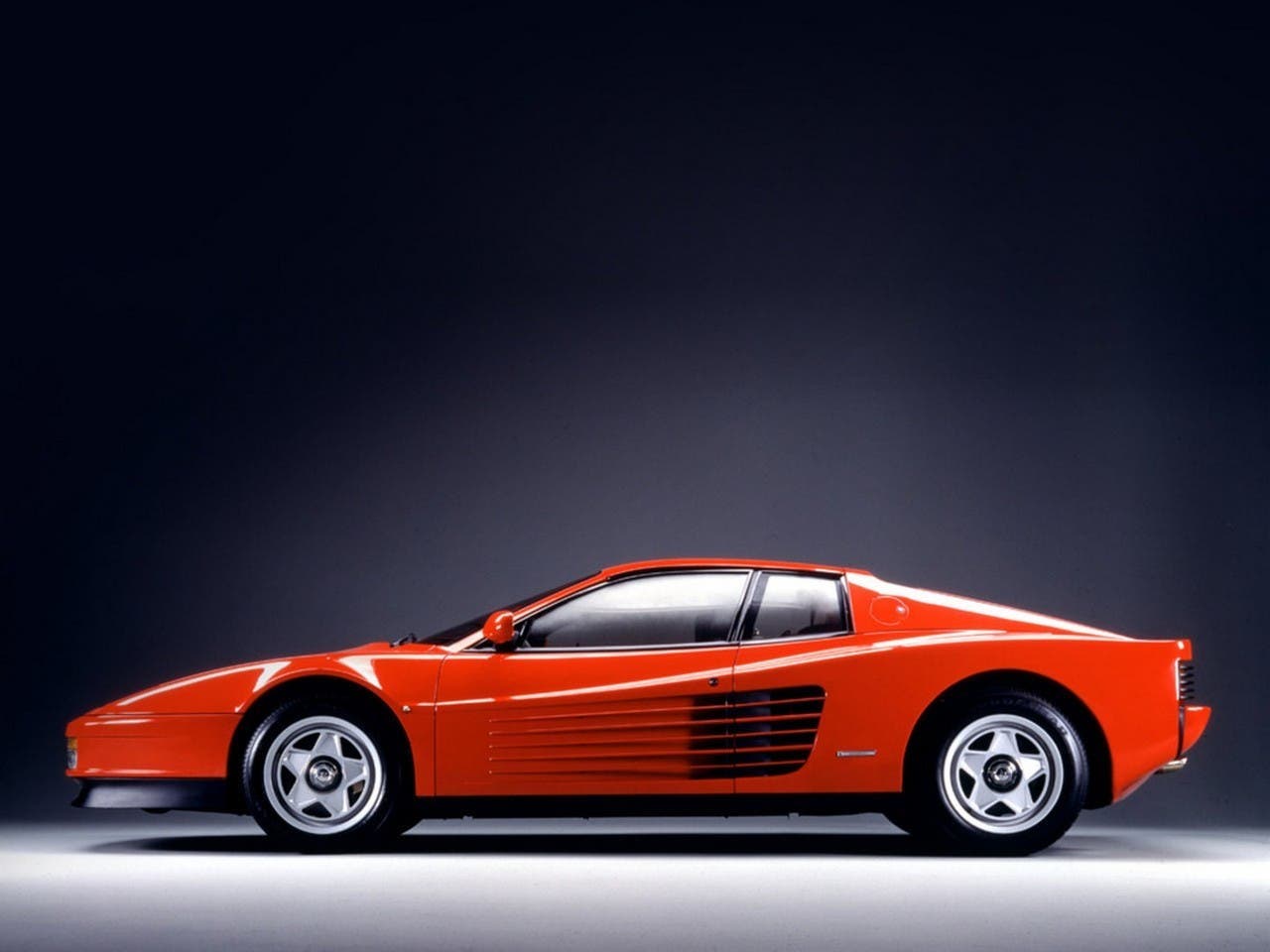
One of the most striking examples is the high-mounted rear-view mirror on the A-pillar. In the early versions, it was fitted only on the driver’s side and placed so high not for stylistic reasons, but to meet homologation requirements. Ferrari engineers interpreted regulations as requiring an unobstructed rearward view for the driver. Given the car’s wide body, muscular sides, and imposing rear, the only viable solution was to raise the mirror. On the passenger side, however, visibility did not improve significantly, so the mirror was omitted altogether. This misinterpretation ultimately created one of the most iconic configurations, now highly sought after by collectors.
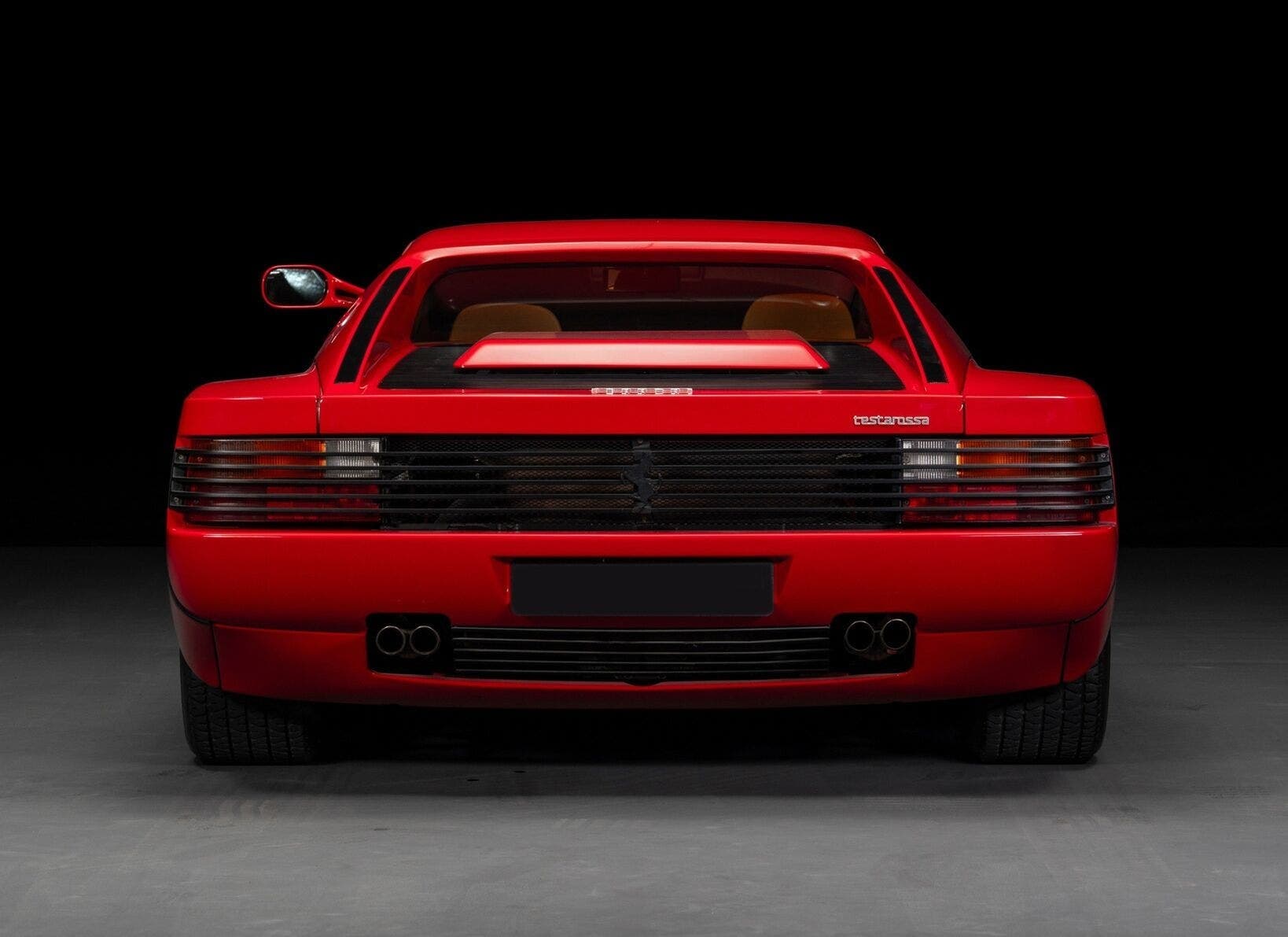
The famous side strakes were also not part of the original design. Early aerodynamic test prototypes did not feature them. Their introduction was linked to U.S. pedestrian safety regulations, which imposed limits on the size of body openings. Pininfarina solved the issue by adding the strakes, turning a constraint into a defining design element. This solution also led to the rear grille above the taillights, helping to visually balance the design and, to some extent, improve airflow.
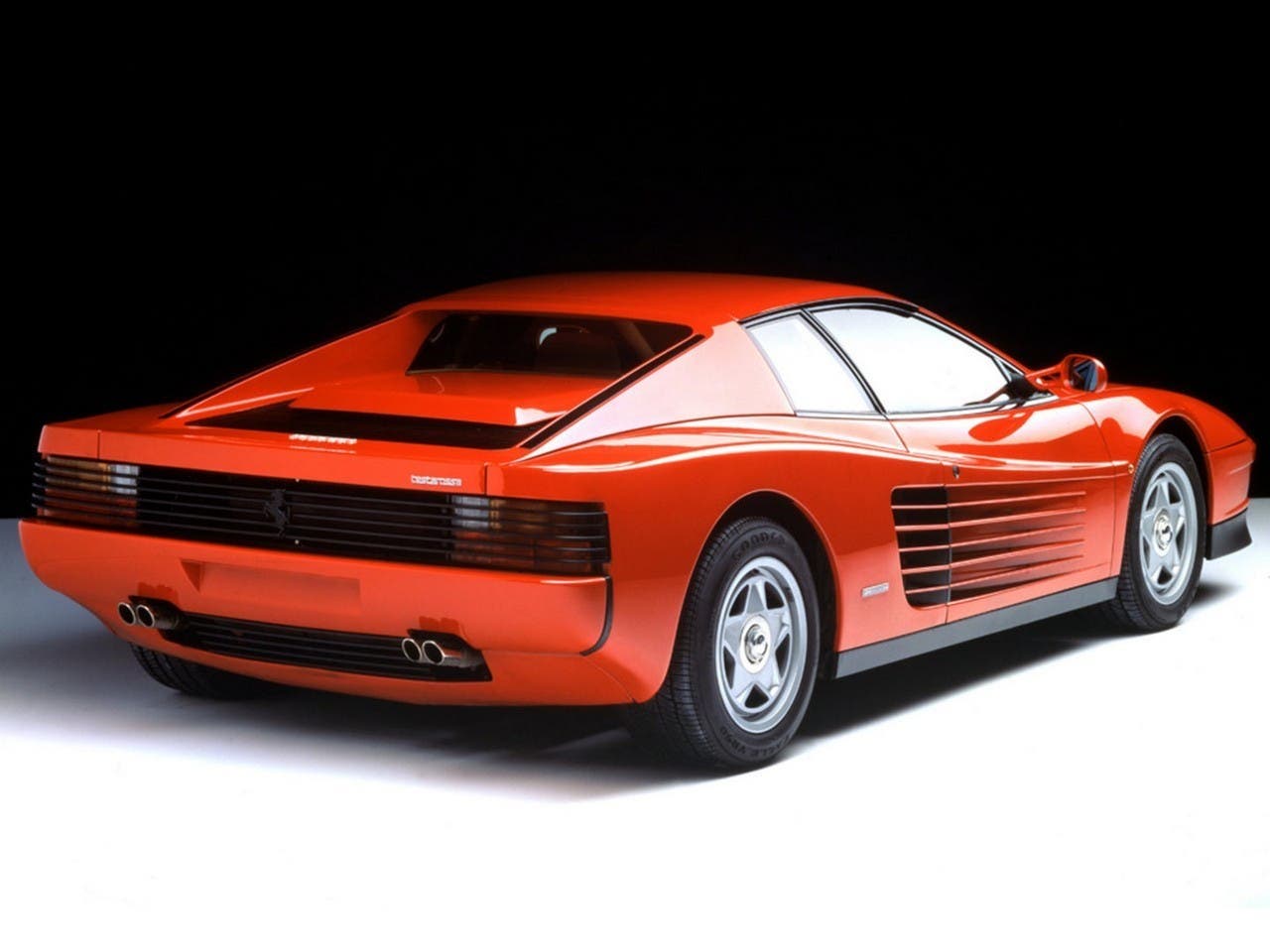
Viewed from above, the Testarossa reveals another key technical decision. The rear track is significantly wider than the front because the radiators were moved to the sides. This layout improved cabin comfort by avoiding coolant pipes running through the interior, as on the 512 BB, and brought the technical concept closer to that of Formula 1 single-seaters. The result was a unique silhouette, wide, low, and instantly recognizable.
From a mechanical standpoint, the Testarossa featured a 5.0-liter flat-12 engine producing 390 horsepower. Despite its extreme appearance, it was not designed as a track car, but as a true grand tourer. It was extremely fast, stable, and surprisingly comfortable for its era, while also delivering strong low-end torque. The sound of the twelve-cylinder engine was an essential part of the experience.
Even today, the Ferrari Testarossa remains a benchmark. Not only for what it represents technically, but also for its cultural impact. It is one of those cars that defined an era and continues to resonate decades later. It is no coincidence that, among all Ferraris, it remains one of the most recognizable and most desirable of all time.