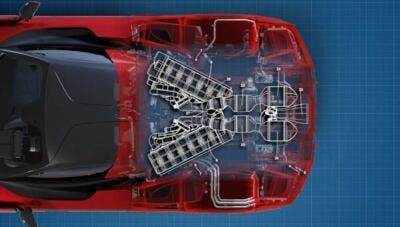
The latest patents Ferrari has filed in the United States describe a twelve-cylinder engine built from two inline-six units arranged in a V, but with a layout radically different from that of a traditional V12. The most striking feature is that the V would not appear from the side, as usual, but from above, a detail that alone shows how far this architecture moves away from conventional schemes.
Ferrari shocks everyone with a V12 patent unlike anything seen before
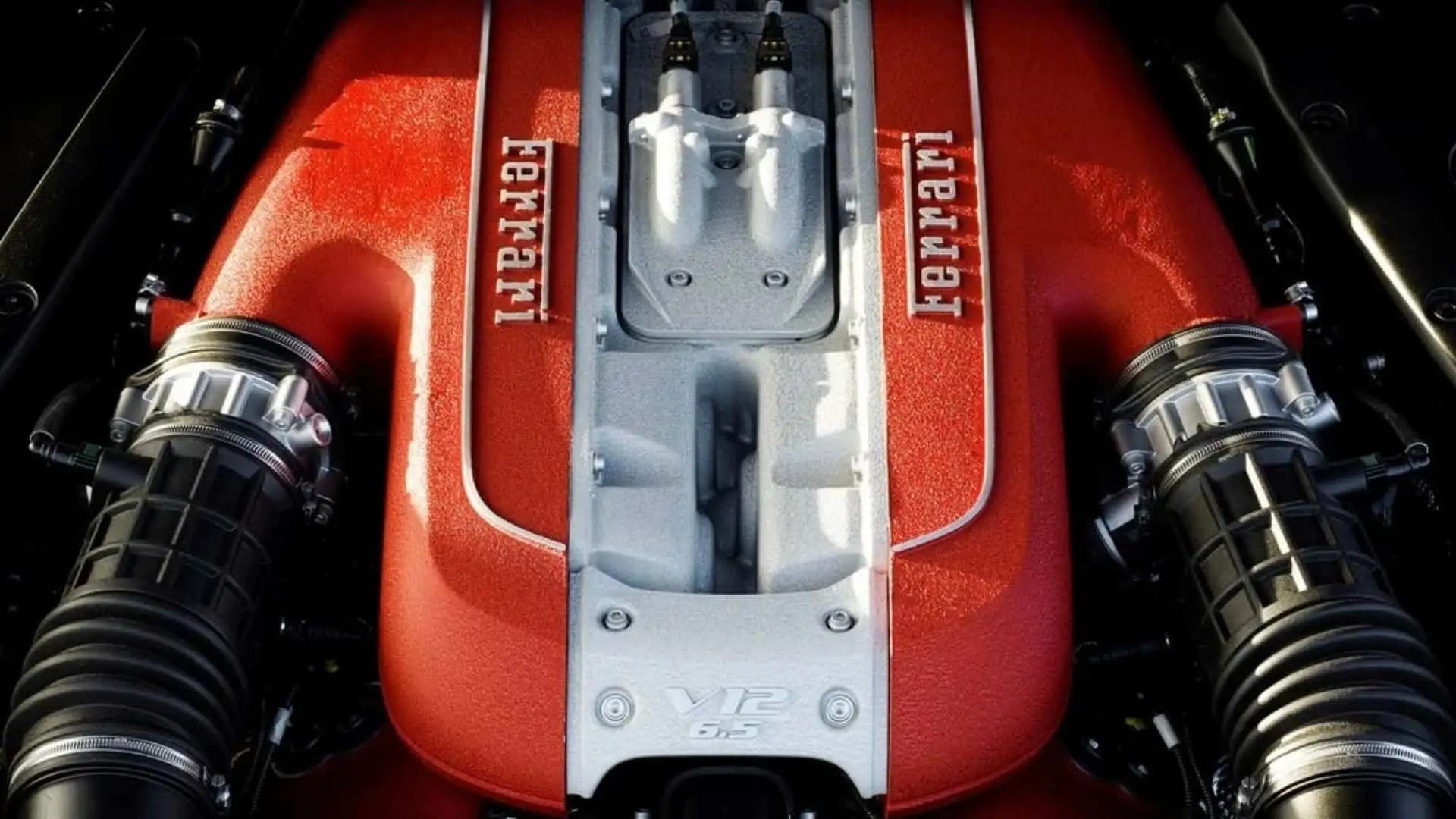
Based on the documents, the system would work as a series hybrid. The two combustion engines would not send torque directly to the wheels but would each power an electric generator, leaving the electric side alone to manage traction. The operating logic would follow a modular approach, with one engine active during low-load phases and both contributing when maximum performance is required. The electrification world already knows this type of setup, but Ferrari applies it here with a level of engineering sophistication that changes its scope in a significant way.
The internal layout appears to have received especially careful attention. To avoid interference between the generators in the space inside the V, Ferrari would orient one of the two engines toward the front of the car and the other toward the rear, placing their respective generators on opposite sides and optimizing packaging. The V angle could vary between 20 and 30 degrees, with the possibility of widening to 45 degrees in order to create extra space for the battery or fuel tank.
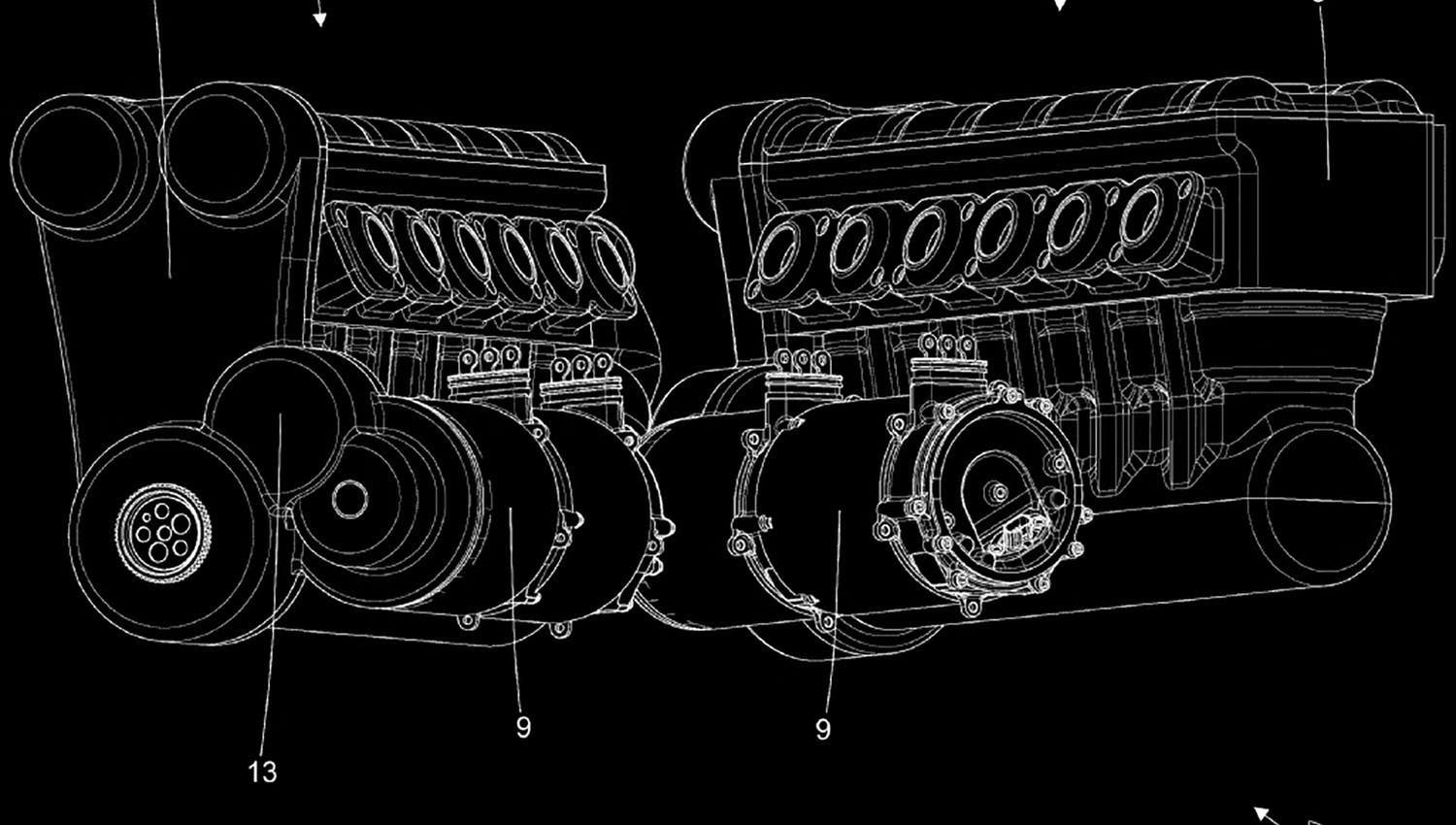
One of the most interesting parts of the patent concerns the exhaust system. The two engines would share a single duct, managed by a valve able to modulate gas flow according to the number of active units, acting both on catalyst temperature and on exhaust-gas evacuation. Ferrari also suggests the possibility of controlling the firing phase of the two engines independently, synchronizing or desynchronizing them in order to shape the car’s sound.
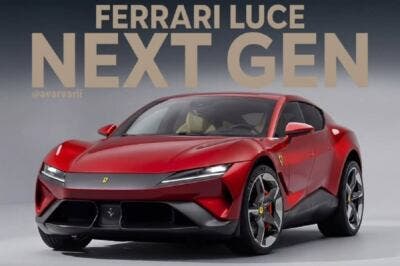
That detail says a great deal about Maranello’s approach to technological transition. Even inside a project deeply focused on electrification, the sound and emotional element continues to play a far from marginal role, almost as if Ferrari wanted to draw a line between the first 1.5-liter Colombo V12 of the 1940s and a future vision of sportiness that still preserves its echo. At the same time, the Prancing Horse is also working on its first electric car, the Ferrari Luce.