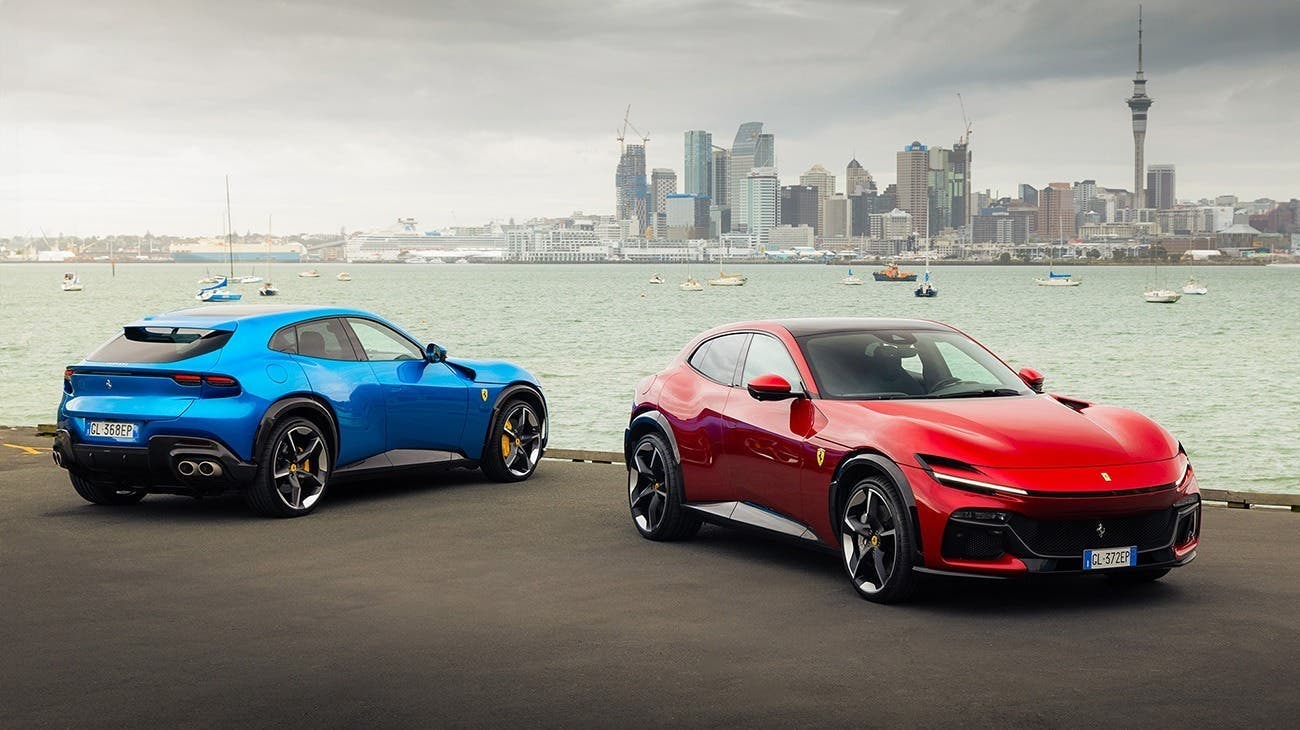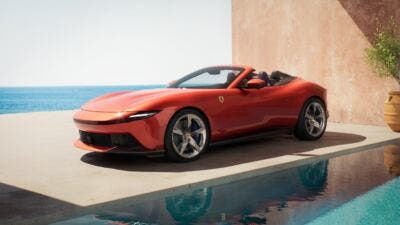
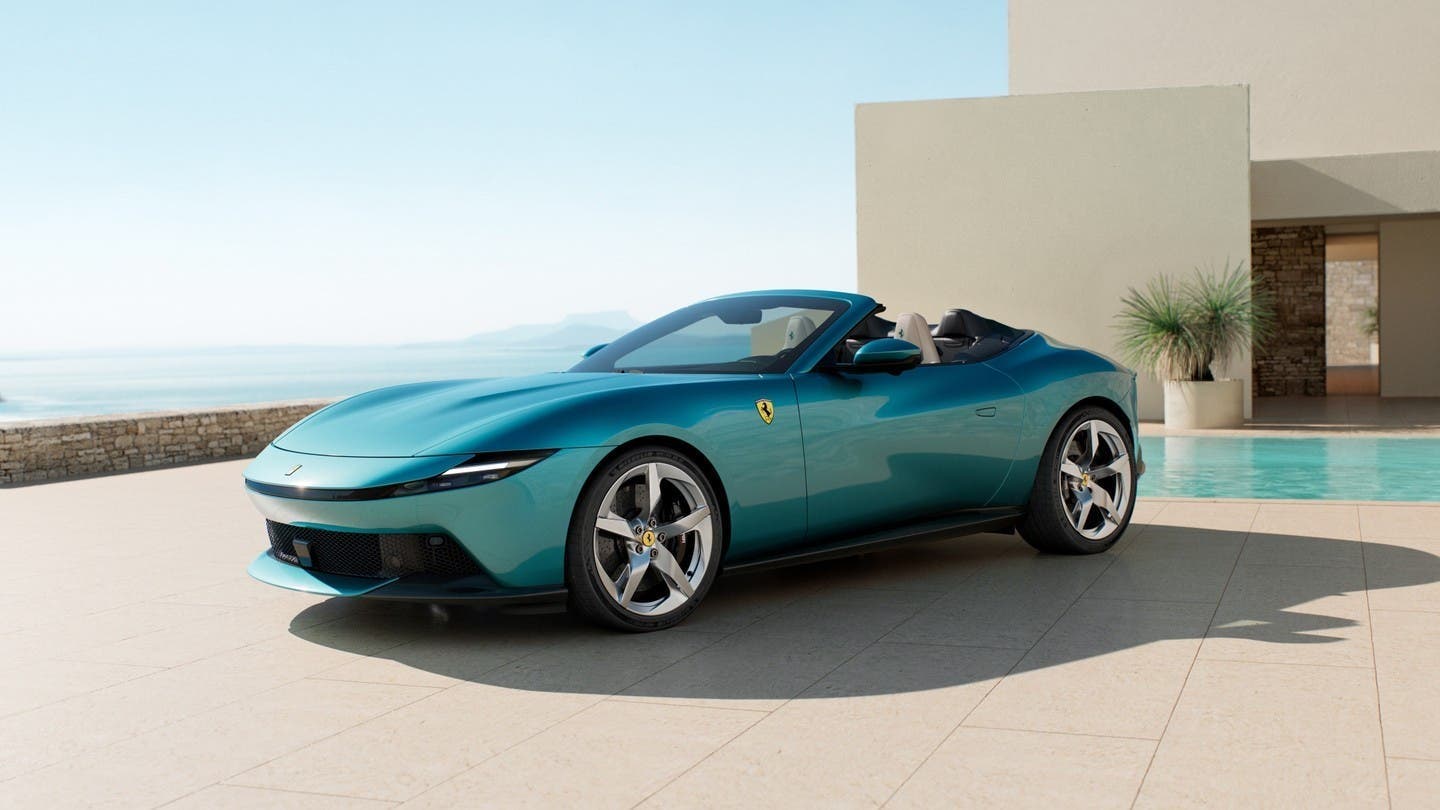
The Ferrari Amalfi Spider replaces the Roma Spider in Maranello’s lineup, positioning itself as a convertible that blends supercar performance with a level of comfort and versatility designed for everyday use. The design marks an evolution compared to its predecessor, with a front end that looks more assertive yet better balanced. Sculpted and flowing surfaces shape the styling language, aiming to convey refined sportiness while maintaining a strong connection to Ferrari’s heritage. The long hood, the large front air intake and the overall proportions contribute to an elegant presence, with a subtle “Dolce Vita” inspiration that Ferrari clearly wanted to cultivate in this project.
Ferrari Amalfi Spider debuts as the Roma Spider’s successor
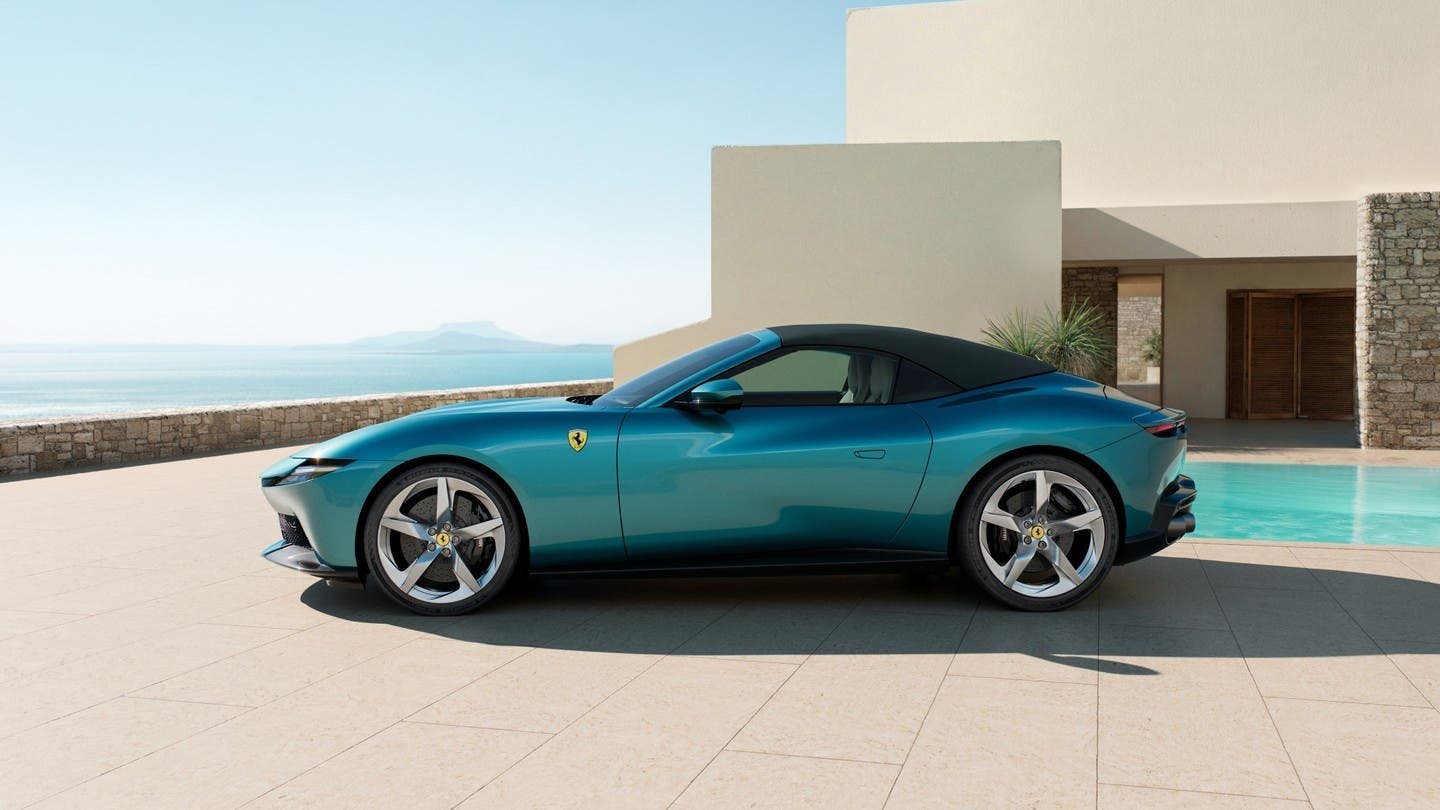
The fabric roof represents one of the key elements of the car. The soft top opens and closes in 13.5 seconds, and the operation can take place while driving at speeds of up to 60 km/h. To minimize the typical compromises of convertibles, Ferrari uses a five-layer acoustic fabric that promises insulation from cold weather, rain and aerodynamic noise comparable to that of a retractable hardtop. When folded, the roof occupies only 220 mm of thickness, allowing the Amalfi Spider to retain a 255-liter trunk with the roof closed and 172 liters with the roof open. These figures make the car more practical than many would expect from a Ferrari, even for weekend trips.
From an aerodynamic perspective, the most notable feature is the active rear wing integrated into the back of the car. It remains almost invisible when at rest but can generate up to 110 kg of additional downforce at 250 km/h, with a drag increase of less than 4%. This compromise preserves the clean design while maintaining efficiency at high speeds.
Under the front hood sits the same 3.9-liter twin-turbo V8 used in the coupe version. Mounted in a rearward position, it produces 640 horsepower and revs up to 7,600 rpm, paired with an eight-speed dual-clutch transmission. Performance figures highlight the car’s capabilities, with 0–100 km/h in 3.3 seconds, 0–200 km/h in 9.4 seconds and a top speed of 320 km/h. The brake-by-wire system improves braking efficiency and pedal feel, while the latest ABS Evo evolution aims to ensure stability and precise modulation across different surfaces and driving modes.
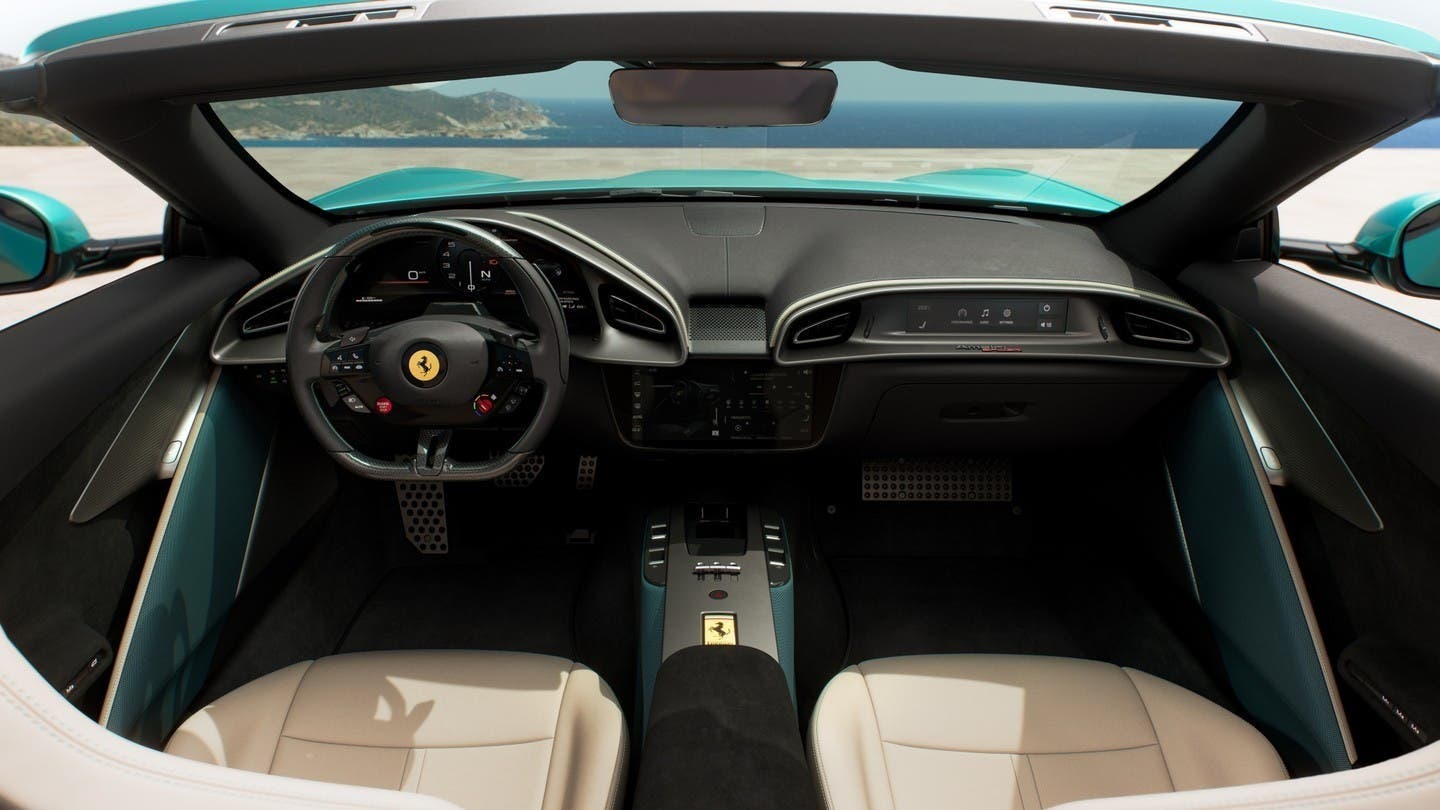
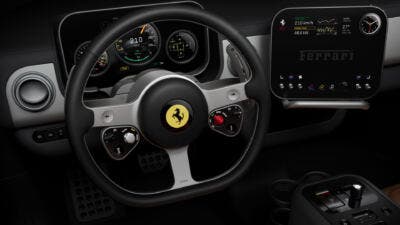
Inside, the cabin follows the dual-cockpit layout of the coupe with a largely similar configuration, differing mainly because of the convertible structure. Physical buttons return to the steering wheel, a feature absent on the Roma and requested by many customers. The 2+ seating configuration adds practicality, with small rear seats that can carry children or increase cargo capacity. Comfort with the roof down improves thanks to an integrated wind deflector located behind the rear seats, which can be activated with a button to reduce turbulence and make open-top driving more pleasant.