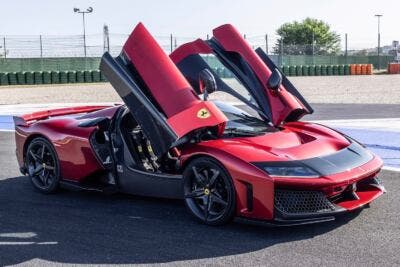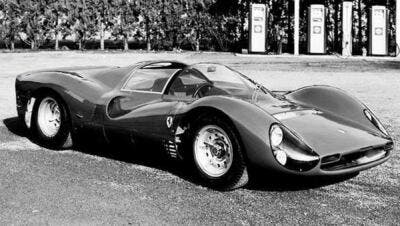
The Ferrari 330 P3 gave Maranello a lighter and more sophisticated challenger for the 1966 sports car season, pairing a 420-hp V12 with a stiffer structure and aerodynamic bodywork that helped shape the later P4. Wins at Monza and Spa confirmed its speed, although limited development time and recurring reliability problems prevented the car from turning that potential into a championship-defining campaign.
Ferrari 330 P3 turns 60, and it still looks breathtaking
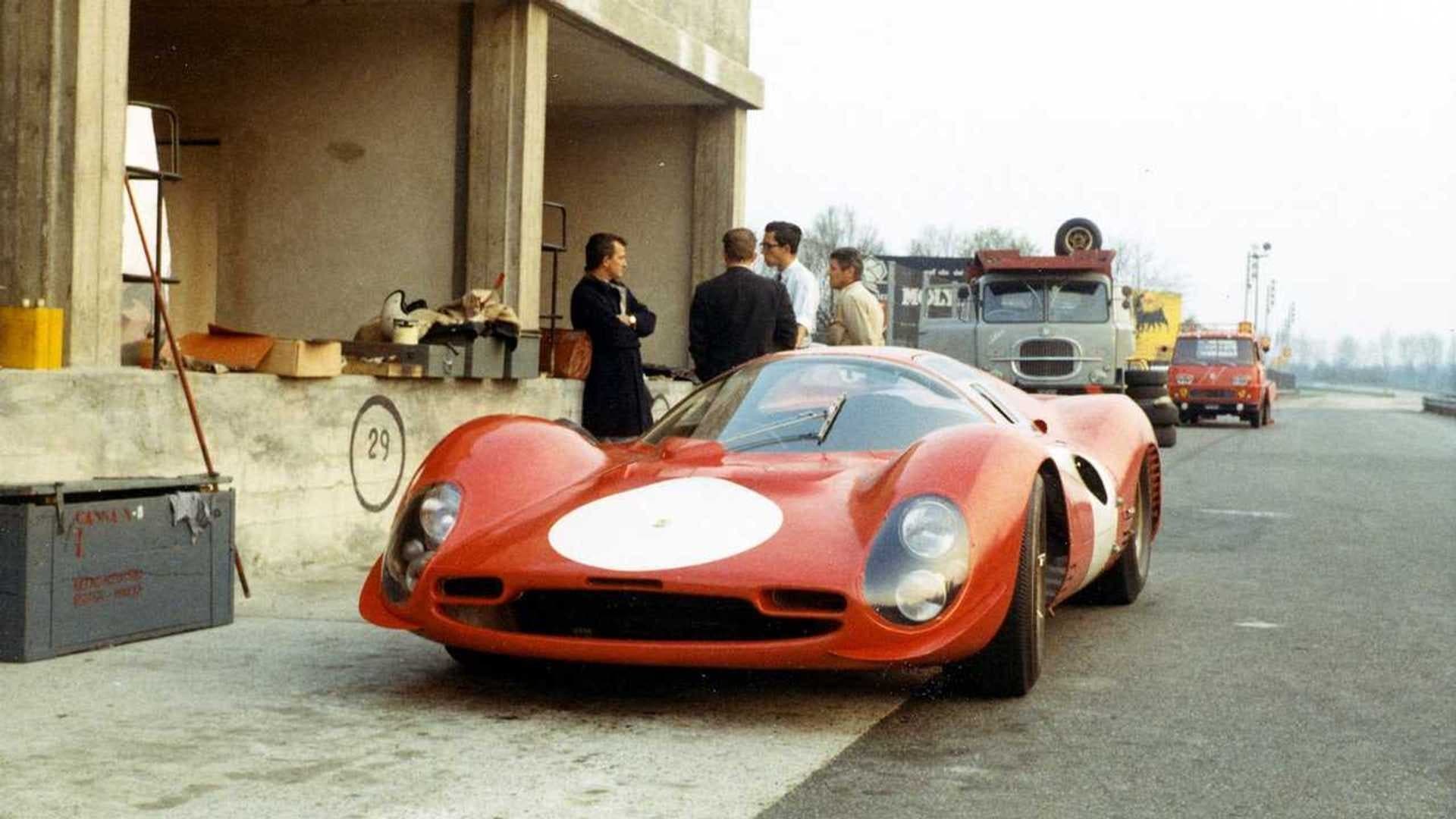
Ferrari evolved the P3 from the 330 P2 but introduced a new tubular chassis with a fiberglass tub. Engineers made the engine and gearbox part of the structure, increasing rigidity without abandoning the low-mass philosophy behind the project. One important distinction concerns weight: Ferrari states that the engine was nearly 30 kilograms lighter than the P2 unit, while the company lists the complete P3 at 851 kilograms dry.
The 4.0-liter V12 sat longitudinally behind the driver and produced 420 hp at 8,000 rpm. Ferrari replaced the P2’s Weber carburetors with Lucas indirect fuel injection and retained twin ignition, dual overhead camshafts and dry-sump lubrication. A five-speed ZF manual transmission completed the drivetrain.
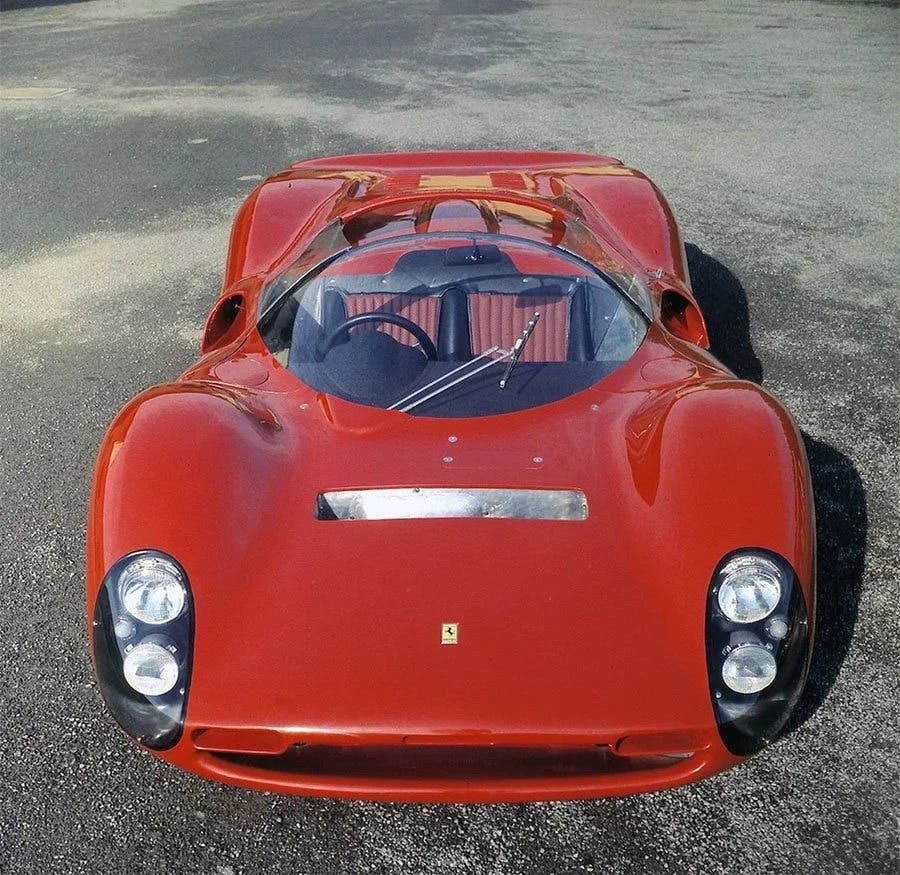
Piero Drogo’s Carrozzeria Sports Cars shaped the P3’s body in thin aluminum, creating one of the most recognizable racing Ferraris of the decade. A low nose, panoramic windshield, flowing fenders and sharply cut tail gave the car an elegant profile without ignoring cooling or aerodynamic requirements. The design later influenced the P4, which retained the same basic visual identity while adding further aerodynamic refinement.
John Surtees and Mike Parkes won the 1000 Kilometers of Monza, while Mike Parkes and Ludovico Scarfiotti secured another major victory at Spa. Those results showed that the P3 could compete at the highest level, but reliability problems repeatedly interrupted its season. Ford dominated the 1966 24 Hours of Le Mans, where its GT40 Mk II models completed a famous formation finish.
Ferrari answered with the 330 P4 for 1967. The new car introduced three-valve cylinder heads, raised output to 450 hp, adopted a Ferrari-designed five-speed gearbox and received revised suspension, brakes and aerodynamics. The P4 became the better-known machine, especially after Ferrari’s 1-2-3 finish at Daytona, but the P3 established much of its technical foundation.
Only three original 330 P3s left Maranello, making the model one of Ferrari’s rarest factory sports prototypes. Its fuel-injected V12, innovative structure and unmistakable bodywork place it between the P2 and P4 not merely in chronology, but as the decisive engineering link between two generations of Ferrari endurance racers.