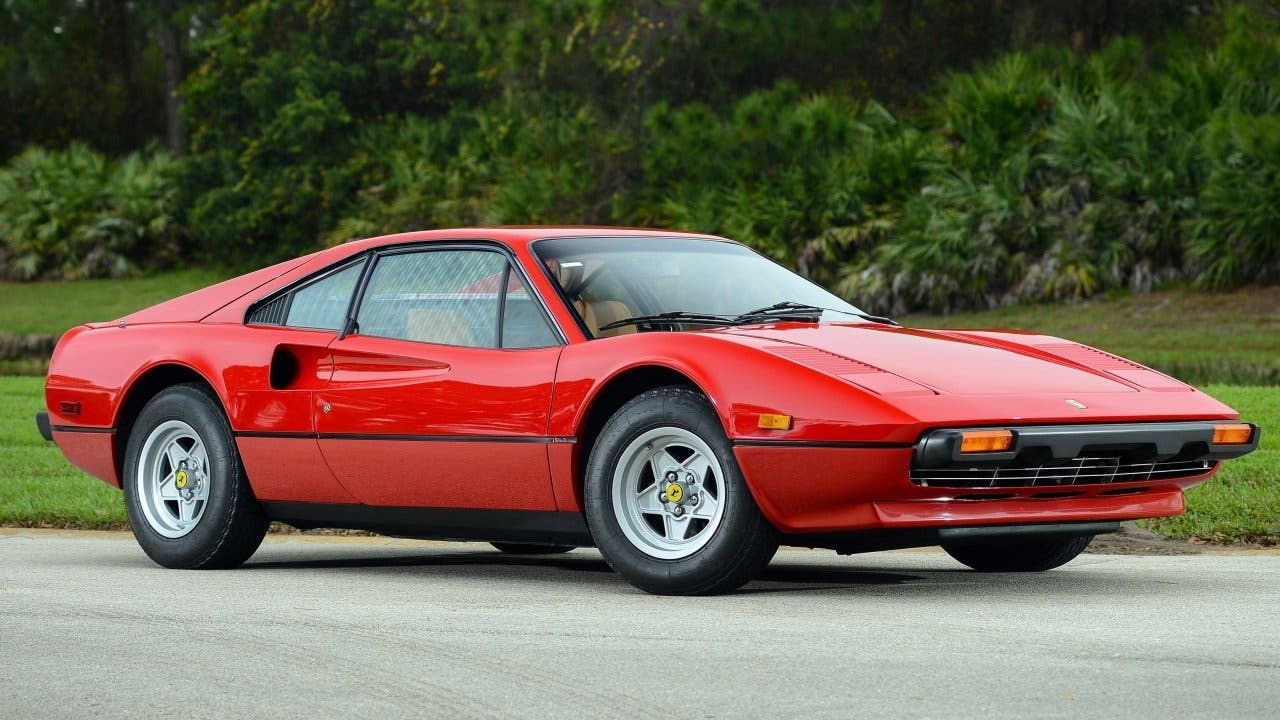
Half a century separates the Ferrari 308 GTB from the 849 Testarossa, but both share the same basic architecture: a rear-mid-mounted V8. Everything else reveals the distance between two automotive eras and two radically different ways of building a sports car in Maranello.
Ferrari 308 GTB vs 849 Testarossa: how the V8 changed over 50 years
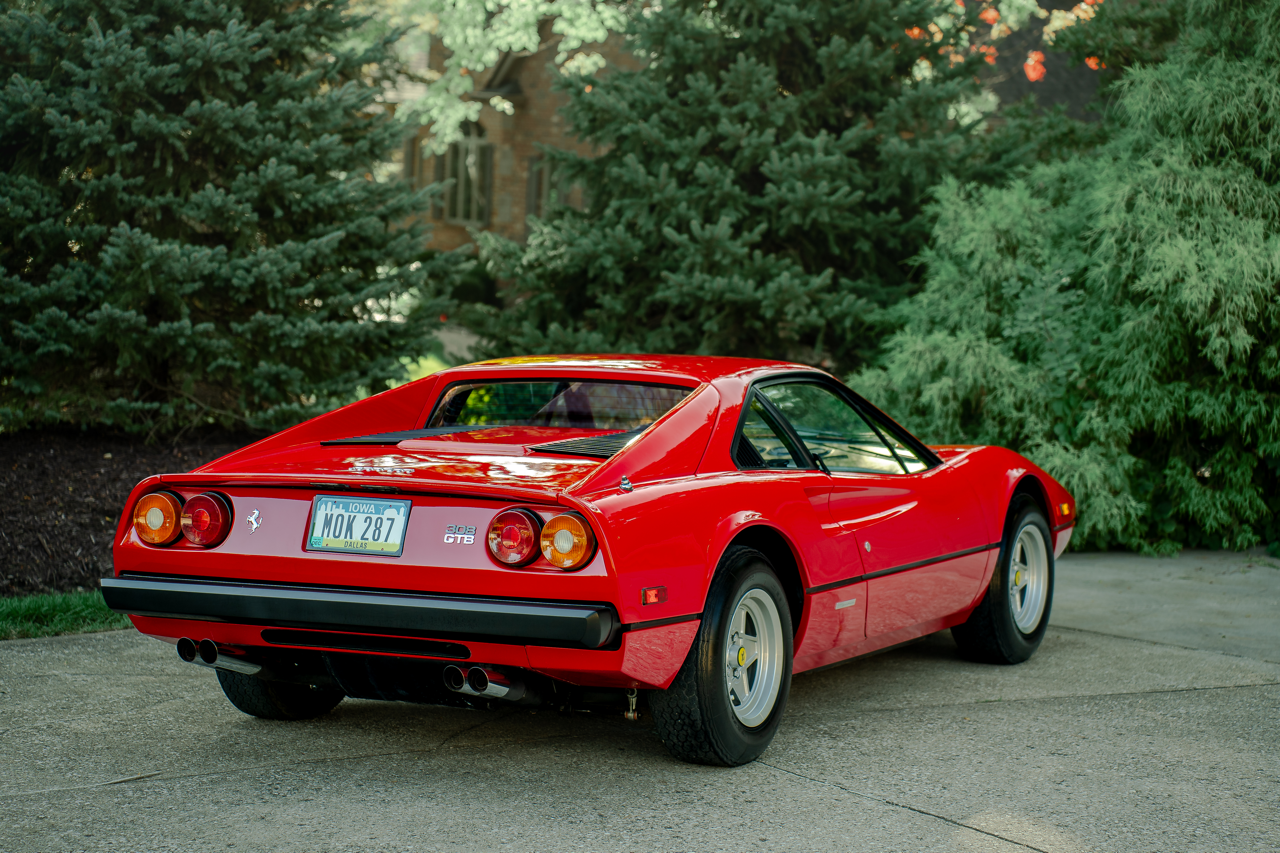
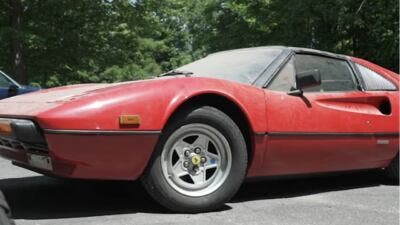
The 308 GTB made its debut at the 1975 Paris Motor Show with a design by Leonardo Fioravanti for Pininfarina, still considered one of the most balanced shapes in Ferrari history. Its proportions were compact and free from excess, with a low nose flowing into clean sides and a tight cabin, giving the berlinetta a silhouette where every element seemed perfectly placed. Early examples used a fiberglass body over a tubular steel frame, a combination that makes them especially desirable among collectors because of their lower weight compared with later versions fitted with metal panels.
The 3.0-liter naturally aspirated carbureted V8 produced 255 hp at 7,700 rpm in the European version, delivered to the rear wheels through a five-speed manual transmission. That was enough for 0-100 km/h in around 6.5 seconds and a top speed of 252 km/h. The introduction of Bosch K-Jetronic injection in 1980 reduced output to 214 hp to comply with emissions regulations, a compromise later corrected by the 240-hp 308 Quattrovalvole. The GTS version, with its removable roof panel, reached a much wider audience thanks to the television series Magnum P.I., turning the model into a pop icon.
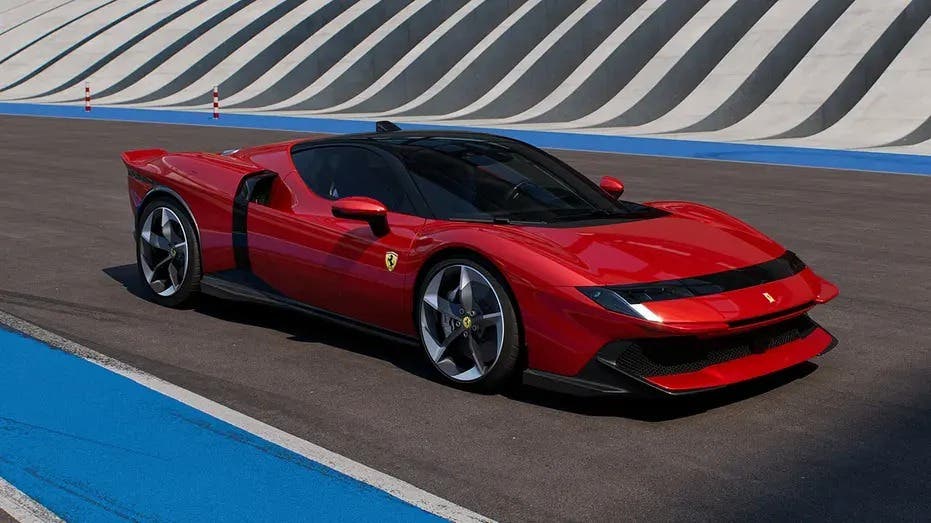
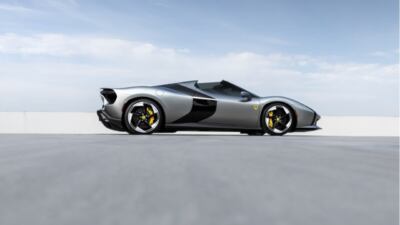
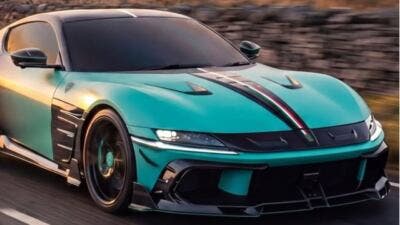
The 849 Testarossa sits at the opposite extreme. As the heir to the SF90 Stradale, it combines an 830-hp 4.0-liter twin-turbo V8 with three electric motors, bringing total output to 1,050 hp. Electronically controlled all-wheel drive allows it to accelerate from 0 to 100 km/h in less than 2.3 seconds and from 0 to 200 km/h in 6.35 seconds, with a top speed of more than 330 km/h. At Fiorano, its 1:17.50 lap time places it among the fastest road-going Ferraris ever, behind only the F80.
Here, electrification serves as a tool to increase traction, response and precision on corner exit, making a level of power usable that would be much harder to control with a purely combustion-based powertrain. The design, with references to the 512 S and 512 M racing cars, is more technical and aggressive than that of the 308. That direction has divided purists, but it reflects the growing importance of aerodynamics and function in modern Ferraris.
A direct comparison between the two cars would make little sense, but together they work as a map of the Ferrari V8’s evolution. On one side stands a naturally aspirated, mechanical engine at the heart of a fully analog driving experience. On the other, the combustion core of a complex hybrid system, governed by electronics and designed to push road-car performance into a territory that, until only a few years ago, belonged exclusively to racing cars.