Firefighters dealing with a conventional car fire know the drill. Douse the flames, cool the metal, haul away the wreck. Unpleasant, dangerous, but ultimately predictable. Electric vehicles, on the other hand, have decided to rewrite the rulebook.
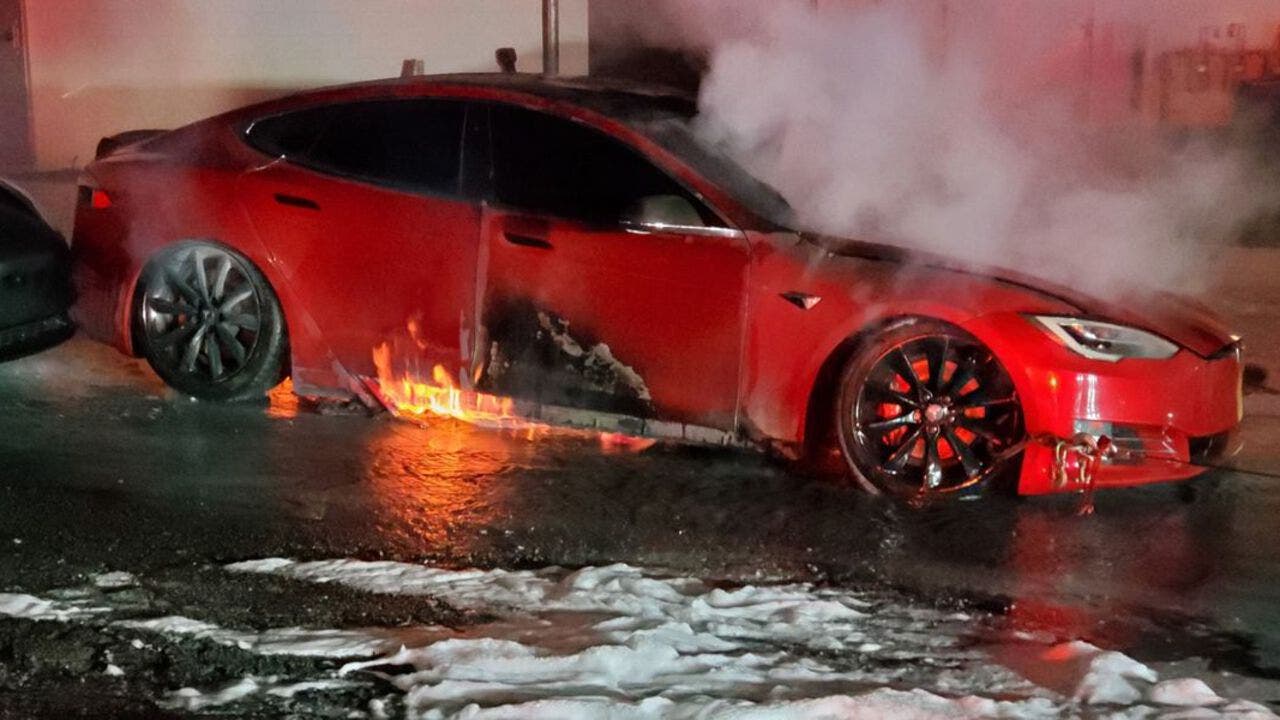
When a lithium-ion battery pack enters thermal runaway, the game changes entirely. Cells keep superheating from the inside, releasing toxic gases with a characteristic crackling sound, long after the fire appears to be out. That “appears” is doing a lot of heavy lifting in the previous sentence. The battery doesn’t care that the flames are gone. It will reignite the moment those gases meet fresh air. Leaving a burned EV unattended isn’t negligence. It’s a calculated risk with potentially catastrophic consequences.
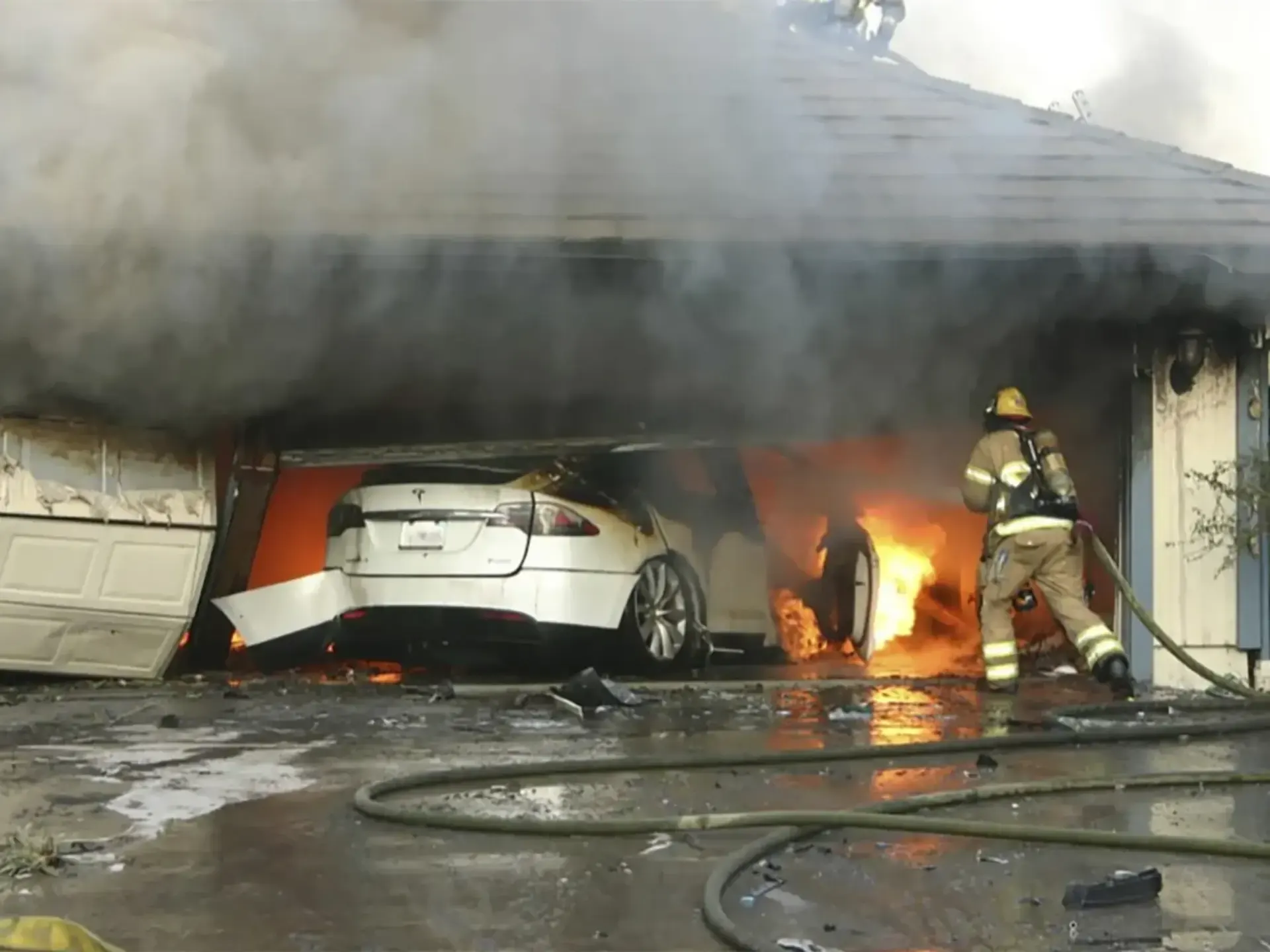
Water helps. A lot of water. According to a case documented by the International Association of Fire and Rescue Services, a single Tesla battery fire consumed roughly 24,000 gallons in 40 minutes. Some estimates put EV fires at requiring up to 40 times more water than a conventional ICE vehicle fire. Forty times. That’s a paradigm shift for emergency response logistics.
The low-mounted battery pack, sealed tight inside a protective enclosure at the vehicle’s floor. Great for handling. Great for rain and flood resistance. A genuine nightmare when that same sealed enclosure is trying to cook itself from the inside out. Tests by the National Fire Protection Association in 2025 showed that flipping a burning EV onto its side gave crews far better access to the battery compartment, cutting suppression time to around 24 minutes with multiple hose lines.
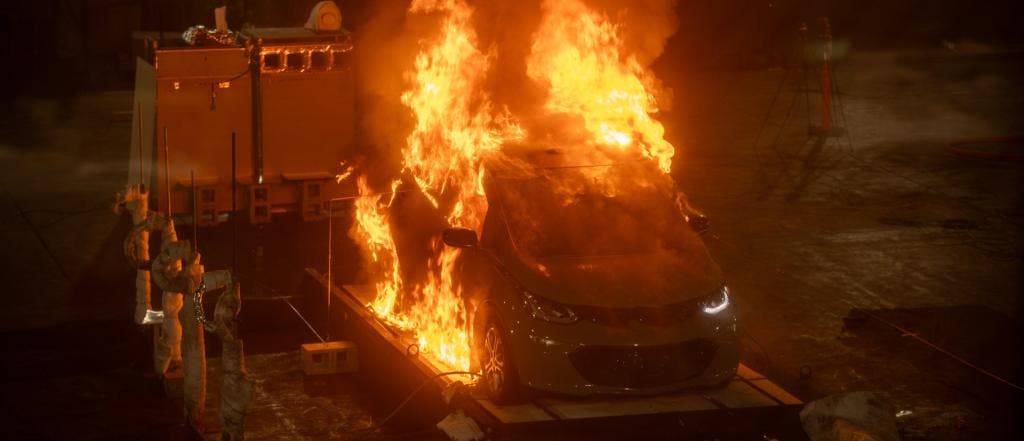
Fire blankets, meanwhile, are worse than useless. They trap the toxic gases building underneath and lifting the blanket to check on things can trigger an explosion.
EV fires are genuinely rare. Data puts them at roughly 25 incidents per 100,000 vehicles, compared to approximately 1,500 for ICE vehicles. Electric cars are about 60 times less likely to catch fire. They just happen to be significantly more dramatic, and dangerous, when they do.