Canada’s cut in tariffs on Chinese electric vehicles, reduced from 100 percent to 6.1 percent for the first 49,000 vehicles per year, with the threshold set to rise gradually to about 70,000 units over five years, has reopened a door for BYD that had closed at the end of 2024, when Justin Trudeau’s government imposed prohibitive tariffs on EVs imported from China.
During an event in Brazil, Stella Li, the group’s executive vice president, said that a Canadian launch has once again become a concrete possibility and that the company is also considering the option of building a plant in the country, a move that would turn the Canadian market from a simple sales destination into a potential operating base in North America.
BYD could use Canada as a new launchpad for North America
However, BYD’s interest in Canada would not stop at local production. In an interview with Bloomberg, Stella Li said the group is open to every opportunity and is reviewing several potentially attractive assets, suggesting that the options on the table may also include acquiring an existing automaker.
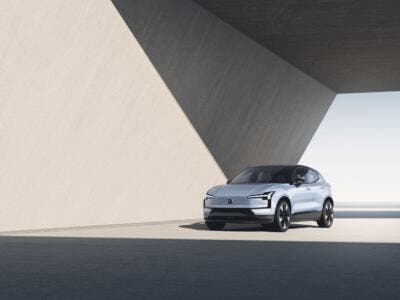
Such a strategy would allow BYD to speed up its international expansion by relying on an already recognized brand and an operating industrial network, following a path that has already produced significant results in the sector, such as Geely’s acquisition of Volvo or MG’s revival under SAIC ownership. For BYD, a move of this kind could also offer an indirect route toward the US market, where direct entry remains blocked for now by tariff barriers.

On the production side in Canada, the Ottawa government has reportedly tried to steer Chinese automakers toward joint ventures with local partners, but on that point Li suggested that BYD’s operating model does not fit that type of collaboration. Her position reflects the group’s broader approach, which favors direct control over the entire value chain, from battery production to vehicle assembly.
Other Chinese automakers such as Geely and Chery are also reportedly looking at Canada with growing interest in light of the new tariff framework, although neither of them has made production commitments for now. BYD, however, appears to be moving more decisively, and the combination of a possible Canadian plant and its stated openness to strategic acquisitions suggests an ambition that goes beyond a simple expansion of its export network, aiming instead to build a structural presence across the North American continent.