

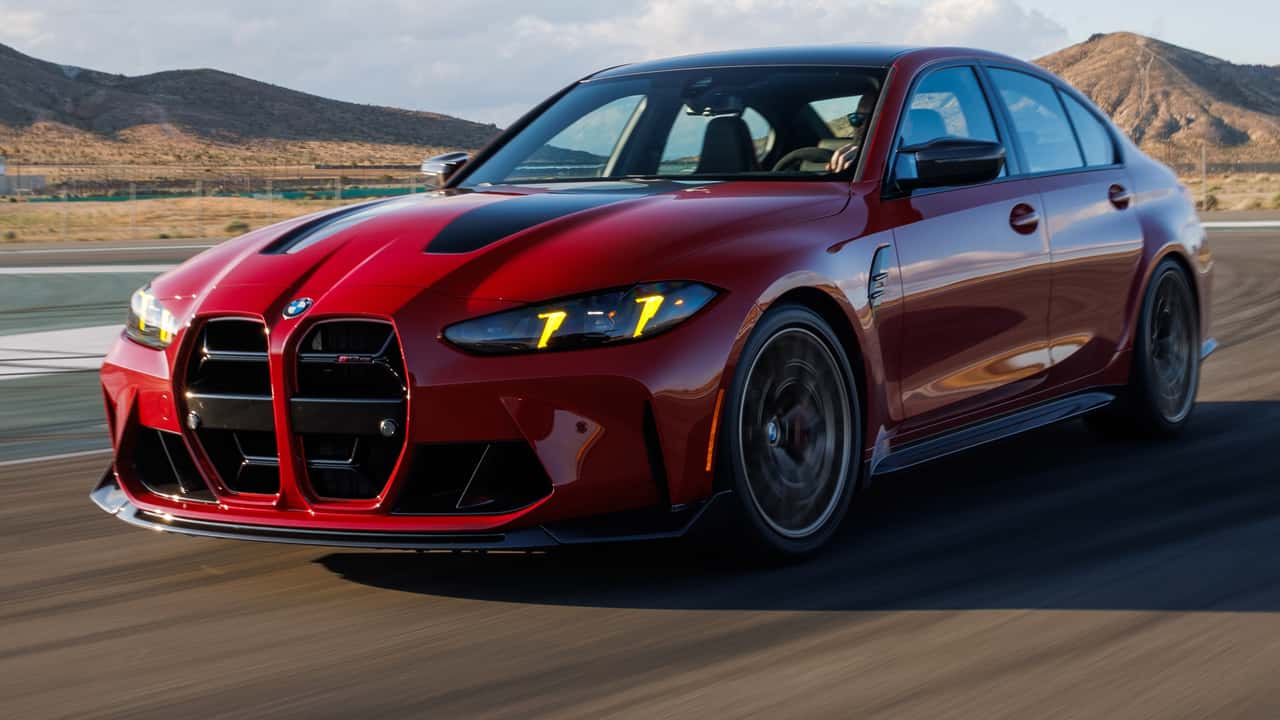
BMW has crafted something inherently contradictory for the North American market: the BMW M3 CS Handschalter. It is a specialized sports sedan that asks you to pay a premium for the privilege of doing the mechanical labor yourself, all while giving you less power than the standard automatic CS.
The conventional BMW M3 CS sedan utilizes a 3.0-liter twin-turbo straight-six pushing out a fierce 550 HP to all four wheels. The newly minted Handschalter, however, detunes that exact same engine back to a modest 480 HP and 550 Nm of torque, matching the baseline, entry-level M3.
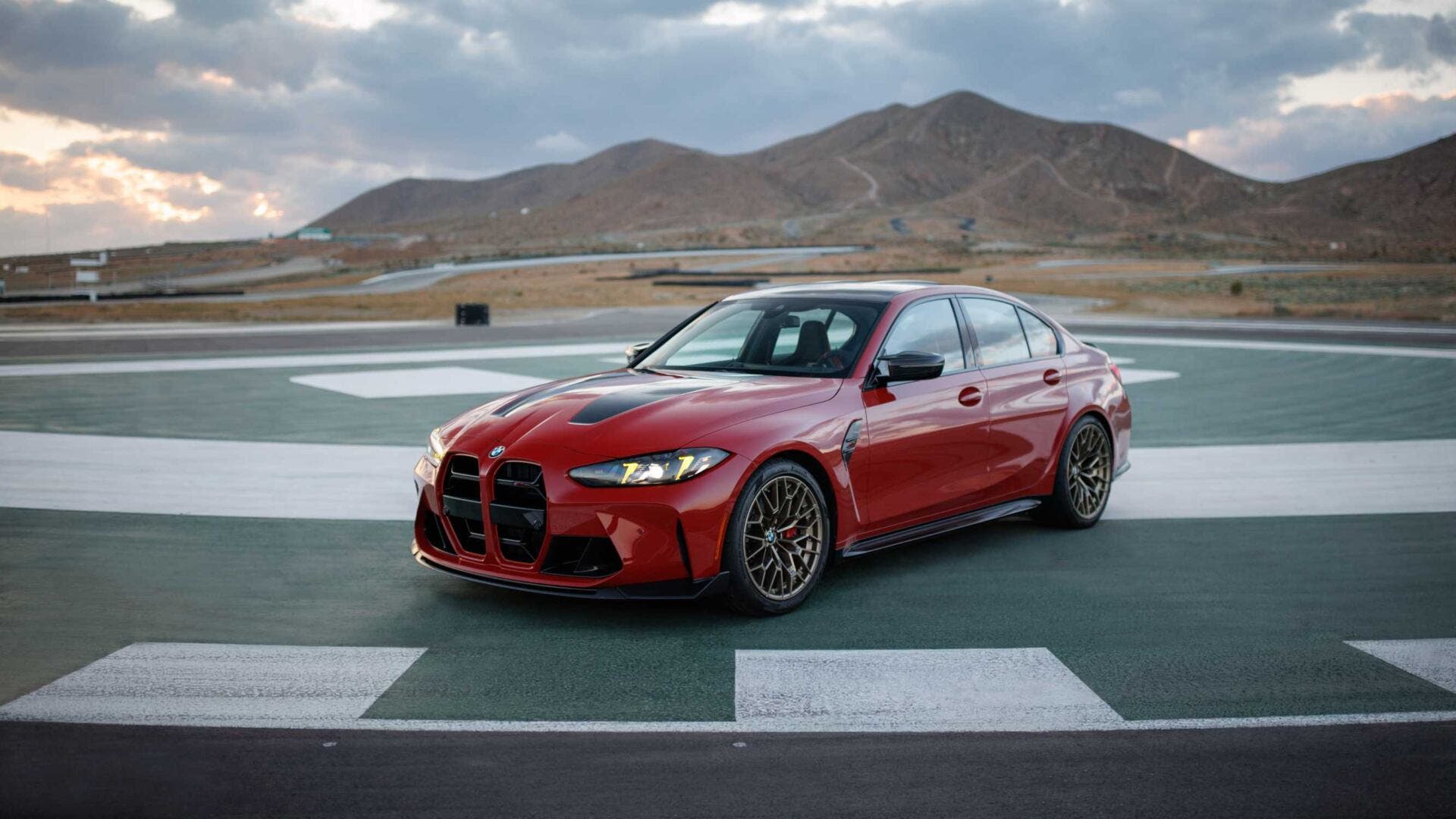
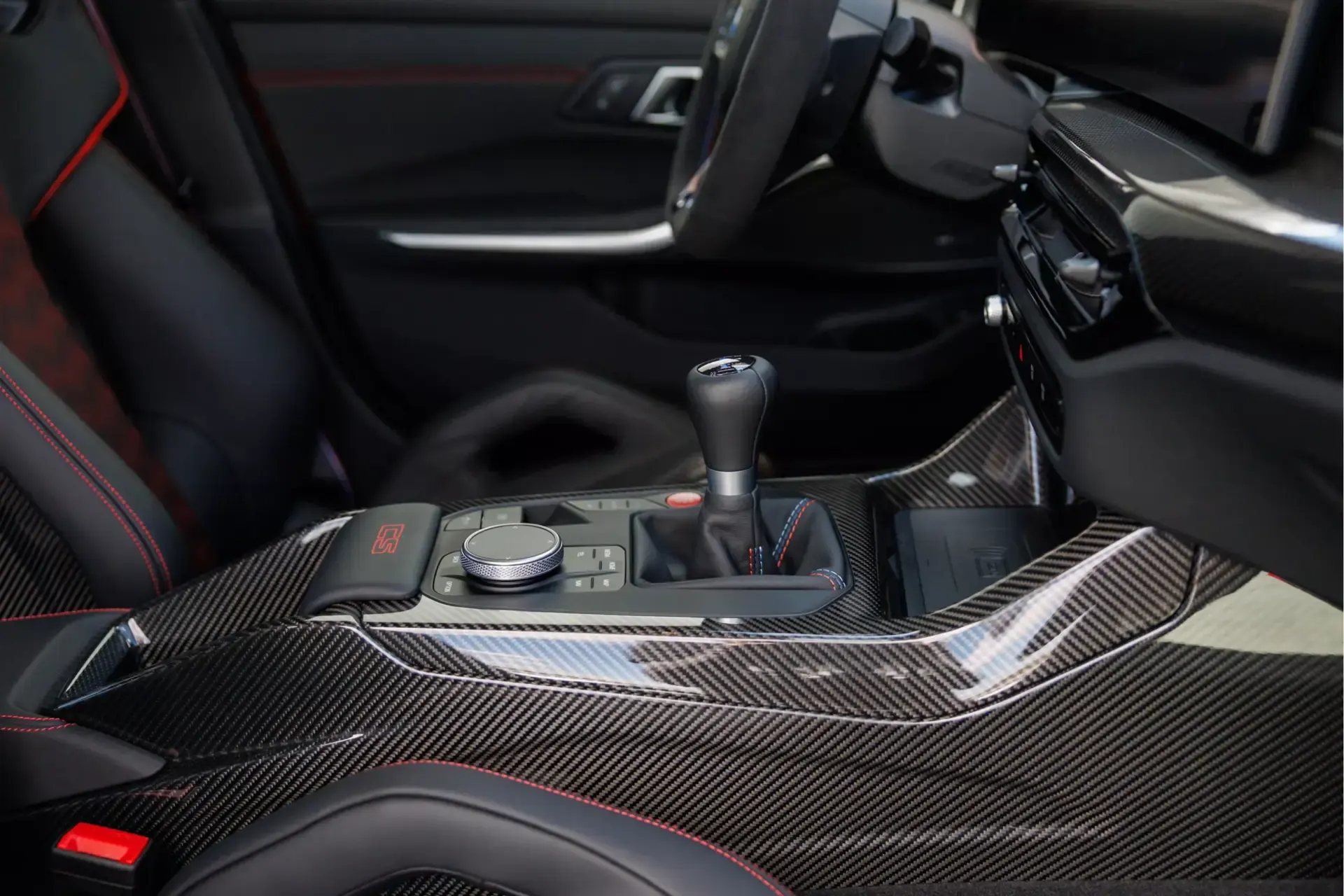
Gone is the sharp eight-speed M Steptronic. In its place sits a traditional six-speed manual transmission driving solely the rear wheels. It accelerates from zero to sixty miles per hour in 4.1 seconds before hitting an electronically governed wall at 180 mph. Essentially, BMW is charging $107,100 for a car that is technically slower on paper, proving that purist nostalgia is a highly profitable commodity.
Yet, beyond the marketing irony, the engineering department has done some serious heavy lifting. The Handschalter isn’t just a parts-bin special. It inherits the aggressive springs and dampers directly from the track-honed BMW M4 CSL. The chassis geometry receives an entirely revised camber setup, accompanied by recalibrated steering and throttle maps designed to extract maximum driver engagement.
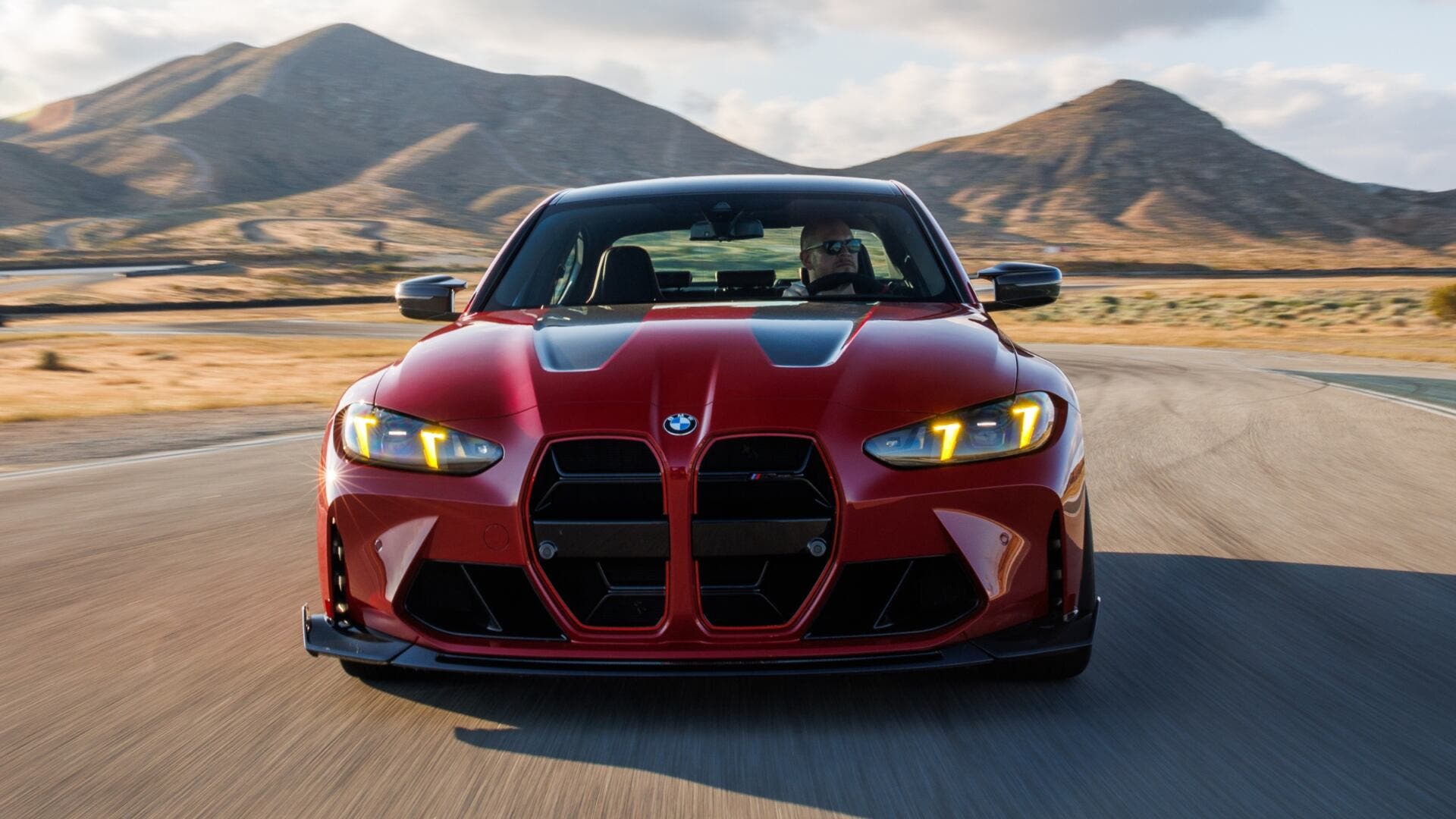
Then there is the obsessive weight-loss program. Through a relentless diet of carbon fiber, covering the roof, hood, splitter, and intake ducts, the sedan sheds roughly 19 kilograms compared to the standard manual three-box shape. Inside, the carbon fiber treatment continues across the center console and the unforgiving M Carbon bucket seats, complemented acoustically by a lightweight titanium silencer.
Slated to arrive in North American showrooms in the fall of 2026, this limited-run edition proves that for some enthusiasts, the perfect driving experience isn’t about chasing lap times.