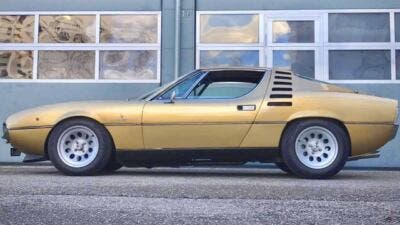
A one-of-a-kind 1972 Alfa Romeo Montreal prowls the streets of Zurich after dark in a cinematic video from Classic Driver, combining a nearly stock appearance with extensively reengineered mechanicals. Swiss dealer Andreas Wüest currently offers the restomod for sale at an undisclosed price after overseeing a three-and-a-half-year development program that required more than 1,300 hours of work.
Alfa Romeo Montreal transformed into a 9,000-rpm restomod masterpiece
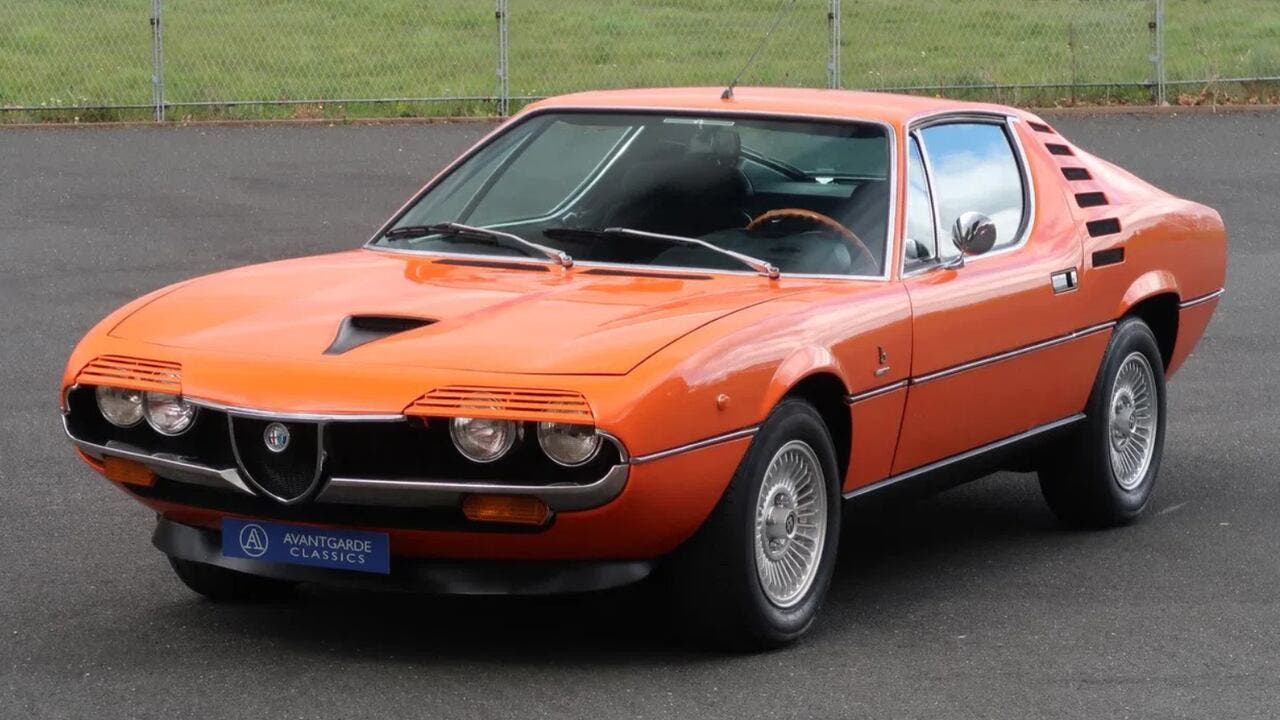
OKTech founder Oliver Koerfgen, a former Ferrari engineer, concentrated most of the changes beneath Marcello Gandini’s original bodywork. The Oro Metallizzato exterior and green leather cabin preserve the unmistakable 1970s character, while the project follows OKTech’s philosophy of keeping modified Alfa Romeos visually close to the factory design.
The original 2.6-liter V8 has grown to 3.25 liters and now uses a custom flat-plane crankshaft, bespoke connecting rods and pistons, larger valves, performance camshafts and individual throttle bodies. Engineers also redesigned the intake with 3D scanning and made the hood scoop fully functional. OKTech does not disclose an exact horsepower figure, although Classic Driver reports output at least twice the original engine’s 200 hp. The V8 can rev safely to 9,000 rpm while remaining smooth and manageable at low speeds.
The upgrades extend beyond the engine. A reinforced transmission works with a custom clutch and a rear axle featuring a 45% limited-slip differential. Four-piston brake calipers sit at all four corners, while fully adjustable Intrax suspension replaces the original setup. Modern wiring, adjustable power steering and redesigned pedals further improve usability without changing the cabin’s period appearance.
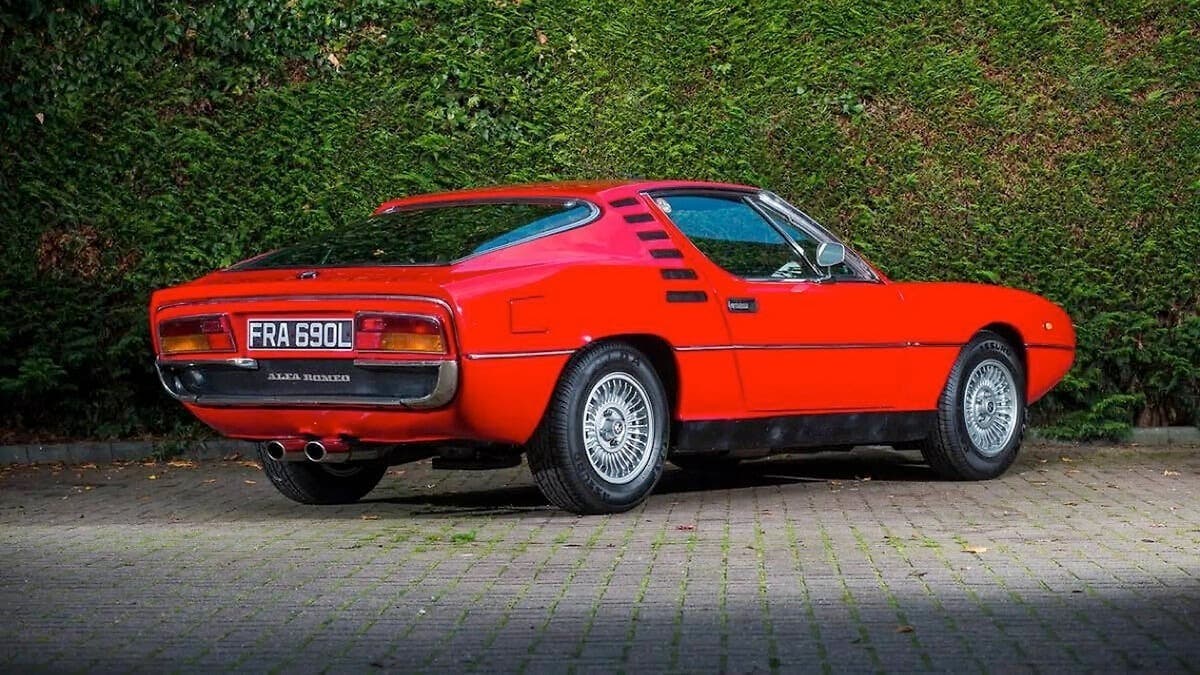
Those changes address some of the weaknesses that limited the production Montreal. Alfa Romeo introduced the original concept at the 1967 World’s Fair in Canada before unveiling the production version at the 1970 Geneva Motor Show. Gandini designed the body and interior for Bertone, while Orazio Satta Puliga and Giuseppe Busso oversaw the technical development.
The road car used a 2.6-liter V8 derived from the Tipo 33 racing program and rated at 200 hp. Period figures placed its top speed at roughly 137 mph, with the run from 0 to 62 mph taking about seven seconds. Its dramatic styling and race-bred engine promised serious performance, but the chassis, brakes and front-heavy balance did not always deliver the precision buyers expected. A high price also limited sales to fewer than 4,000 cars before production ended in 1977.
Collector interest has grown substantially since then, and the OKTech build directly addresses the gap between the Montreal’s visual promise and its original driving experience. Classic Driver’s night film presents a car that remains instantly recognizable while delivering the sharper response, stronger braking and more controlled chassis behavior expected from a modern performance car.